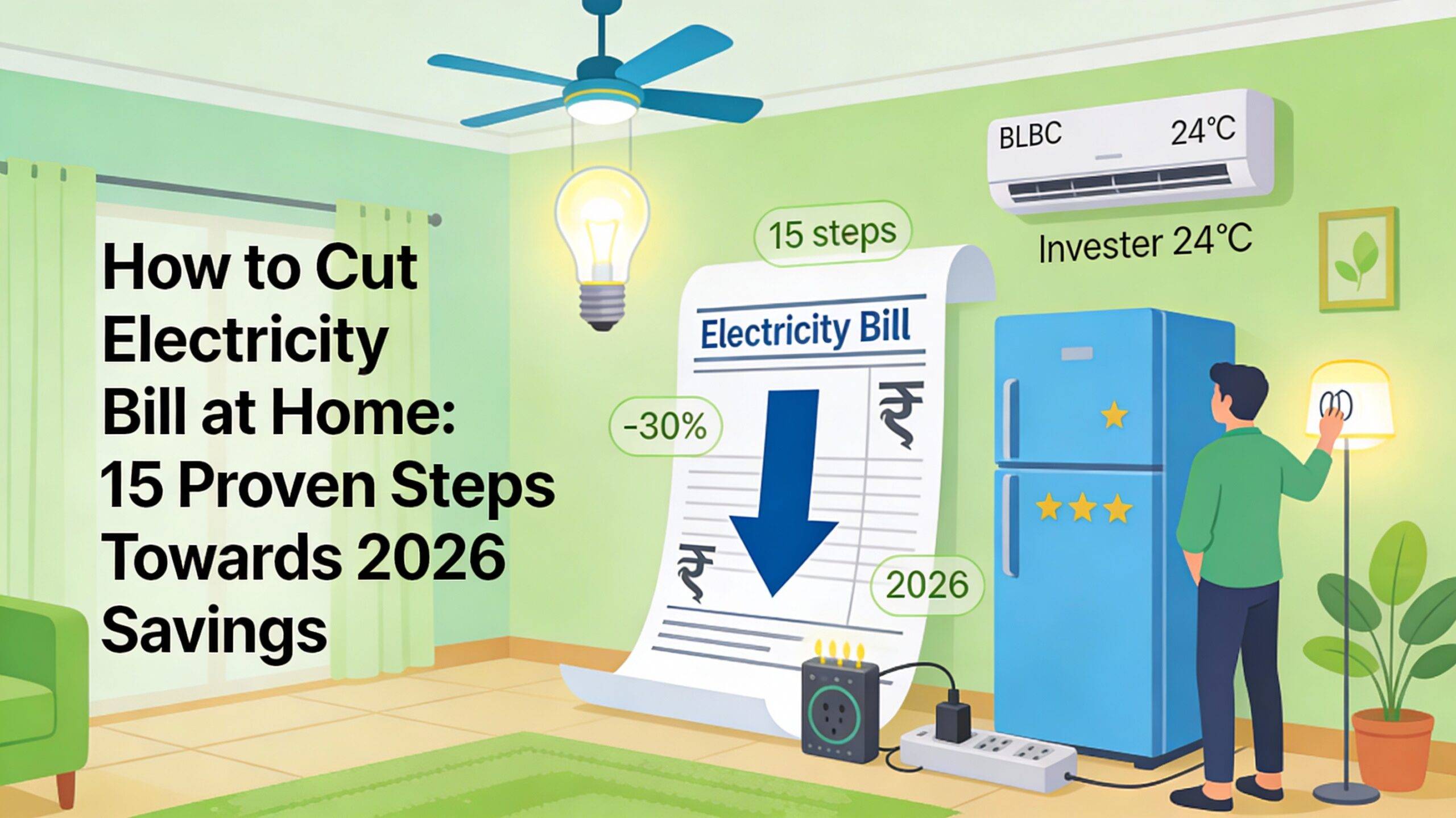
How to Reduce Electricity Bill in Home: 15 Proven Tips for 2026 Savings
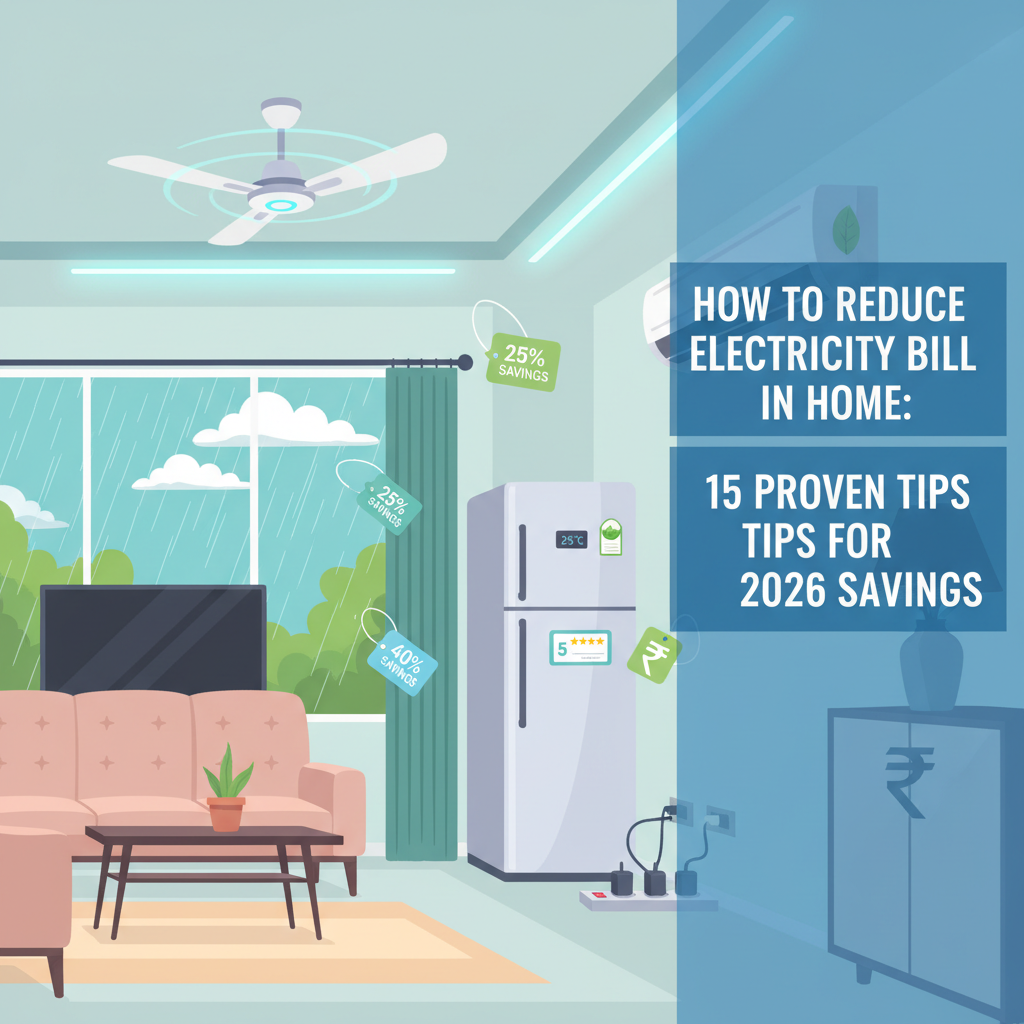
Having trouble with skyrocketing electricity bills? You aren’t alone as many Indian homes face a 20-30% hike in their electricity bills for summer or rainy season bills with the extra use of ACs, fans, and fridges. The relief is that by making a few adjustments in your lifestyle and upgrading your home with some genius solutions, you can cut your bills by 25-40% without trading off on both ends for your homefy tech products.
Understand Your Bill First
Before leaping into solutions, fetch your most recent electricity bill and jot down the units (kWh) you have used. In India, tariffs fluctuate—Delhi might charge ₹6-8 for per unit, while Maharashtra is in ₹10+ for the higher slabs. Monitor usage, spend ₹500 on an energy meter (like those made by Orient or Havells) and plug it into heavy appliances. Fans consume 10-15% of the bill themselves; ACs upto 50% in peak summer. Try to save 100-200 units every month and your savings will be ₹800-1500. Pro tip: Track that by with free apps Bijli Bill Checker to observe and predict next month’s costs.
Optimize Your Refrigerator and Kitchen Gadgets
How to reduce electricity bill in home, by saving electricity from Refrigerators, Refrigerators works nonstop, and consuming 200–400 units yearly if inefficient. Choose 5-star BEE-rated models (like LG or Whirlpool under ₹20,000) with inverter compressors — they adjust power like car ACs and save 30–50% compared to non-inverter types. Keep them about 70% full (not stuffed), set temperatures to 4–5°C, and clean coils every three months. Defrost frost-free models quarterly to avoid overuse. Limit convection mode on microwaves and OTGs, and use air fryers (under ₹5,000) — they reduce induction cooking energy by 40%. For induction stoves, select 1600W models and cook on medium heat — boiling water on high wastes 20% more power.
MASTER AC and Cooler Usage
ACs are major power guzzlers, so how to reduce electricity bill in home, by limited uses of acs and coolers but smart operation can cut costs. Set summer thermostats to 24–26°C — each degree lower increases costs by about 6%. Use an 8-hour night timer and clean filters monthly; clogged filters can raise consumption by 15–20%. Choose 5-star inverter ACs (Blue Star or Voltas, ₹30,000–₹40,000) over 3-star models to save ₹2,000–₹3,000 annually. In dry regions, desert coolers outperform ACs, using 80% less energy — honeycomb pads last longer too. Ceiling insulation sheets (₹200/sq m) reduce roof heat, lowering AC load by up to 25%.
Cut Phantom Power and Standby Loads
“Phantom” or vampire power consumed by chargers, TVs, and routers quietly eats up about 10% of your electricity bill (50–100 units). Unplug devices or use smart power strips (₹500–₹1,000, such as those from Syska) that automatically cut off idle devices. A TV on standby uses 5–10W daily — that’s around 3 units a month! Set your laptops and phones to charge only up to 80%, then unplug. In India, geysers are another hidden culprit — switch to 25L instant models (Bajaj or Racold) with timers, and run them only 15–20 minutes per bath. so this is How to reduce electricity bill in home.
Boost Ventilation and Insulation in Your Home
When your attic traps heat and your walls let in drafts, your ACs and fans doing end up working overtime. Seal the gaps around doors and windows with inexpensive rubber strips (₹100 per roll) to keep cool air inside. Hang double curtains or bamboo blinds — they can block up to 30% of unwanted heat from entering your home. Simply painting your roof white or using a reflective coating like Asian Paints cool roof paint (₹500/ltr) can reduce indoor temperatures by about 5°C. Let your home breathe by opening east–west windows in the mornings and evenings to allow natural airflow. Have ceiling fans with light kits? Switch their rotation during winter to push warm air downward — a small tweak that keeps you cozy while cutting heating costs.
Laundry and Water Heating Tips And tricks
When doing laundry, always run full loads on eco mode using cold water — hot cycles consume nearly twice the energy. Front-load machines (Bosch or IFB, ₹25,000+) save around 50% more power compared to top-loaders. Skip the dryer when possible and air-dry your clothes — dryers use electricity like mini ACs. For your geysers, insulate pipes with foam tubes (₹200), set the temperature to 60°C, and consider using solar energy as backups (₹10,000 solar panels can offset up to 70% of electricity usage). Installing low-flow showerheads (₹300) can reduce water heating needs by about 20% without compromising water pressure. so This is How to reduce electricity bill in home, by using perfect and power saving laundry and water heating tools.
Leverage Solar Energy & Renewable Energies
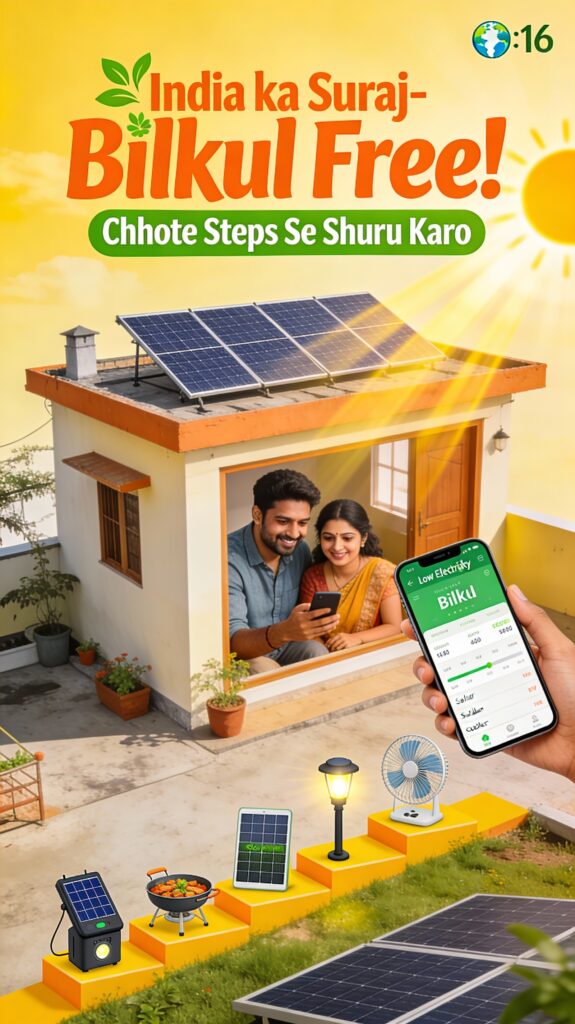
India ka suraj is completely free source of energy.
Begin with Tiny Steps
Solar stands for lighting balconies/gardens (₹500, no wiring).
Roof-top solar power systems (3kW, ₹1.5-2 lakhs after subsidy) produce 400 units of electricity per month, cutting down consumption by 70%.
There is 60% subsidy for PM Surya Ghar Yojana; apply online through discom website.
Portable solar power banks (EcoFlow Delta, priced at ₹40,000) can charge mobiles/Fridges in power cuts.
Modification of Behavior for Instant Wins
Habits are the key.
Cook in bulk.
Utilize pressure cookers or lids to retain heat.
Iron multiple clothes simultaneously for cotton settings.
Avoiding peak appliances between 10-11am would save more in some states with higher tariffs.
Google Home/Nest thermometer (₹5,000) helps monitor energy consumption: voice commands for fans/ACs, automated shut-off.
Home challenge: “No lighting in unused areas” helps save between 10-15%.
Home Audit & Technology Solutions
Home audit: This is done for free by discoms, helping you track down leaks.
Smart meters will enable you to monitor things on the spot.
Home automation (₹20,000 for Syska/Switchbot) allows you to connect lighting or fans with motion sensors.
Green homes with LED lighting, motion-sensitive lighting, or solar fans can save you up to 40%.
Return on Investment
BLDC fan takes 6 months, solar power 3-4 years.
Tracking Progress
It is important to monitor progress while “After 1 month, compare bills—expect 20% drop initially.”
“Myths busted: Fans cool rooms empty (no, they cool people); more stars always cheaper upfront (balance with usage).”
“Tariffs are rising in India by 5-10% annually. This is urgent in India in 2025.”
“Share your before/after pictures in comments—what is your biggest saver?”